



How to handle gas leakage from an outdoor SF6 circuit breaker?
2026-03-24 16:04:09
The core principle for handling SF6 (sulfur hexafluoride) circuit breaker gas leaks outdoors is to prioritize personnel safety, preventing poisoning and asphyxiation, while implementing different handling measures based on the severity of the leak.
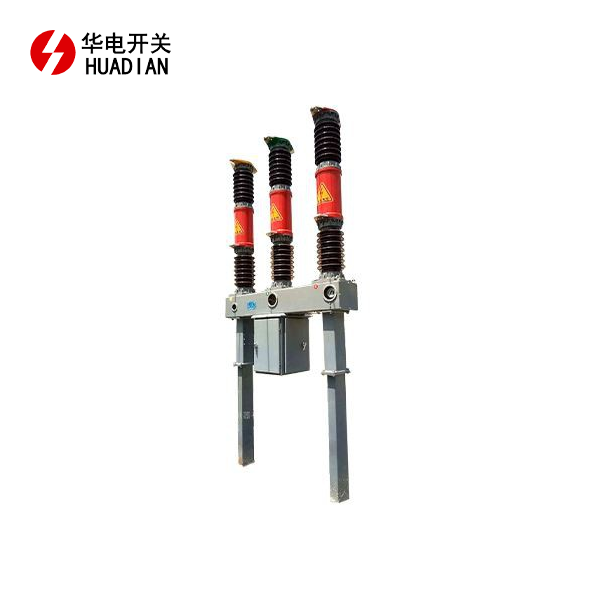
The following are standardized handling procedures and operating guidelines:
Step 1: Emergency Evacuation and Site Isolation (Most Critical)
Upon discovering a leak or receiving an alarm, on-site personnel must immediately take the following measures, and blindly approaching the equipment is strictly prohibited.
Rapid Evacuation:All personnel should immediately evacuate to a safe area upwind.
Forced Ventilation:If the leak occurs indoors (e.g., in a switch room), all exhaust fans must be immediately turned on for powerful ventilation.
Safe Access:No one is allowed to enter the leak area without wearing a positive-pressure breathing apparatus or gas mask. Entry is only permitted after ventilation has been completed and instrument testing confirms that the SF6 gas content is within acceptable limits and the oxygen content is not lower than 18%.
Warning and Isolation:Set up a safety fence around the leak area to prevent unauthorized personnel from entering.
Step Two: Handling Leakage Based on Severity
Scenario 1: Minor Leakage (Pressure Drop Only, Not Locked Out)
If only the pressure has dropped slightly and the circuit breaker is not locked out, try replenishing gas while the circuit is energized.
Reporting and Inspection: Immediately report to dispatch and maintenance personnel to locate the leak.
Energy-Based Gas Replenishment: For minor leaks, replenish gas while the circuit breaker is running, following the pressure-temperature curve, to restore the pressure to the rated value.
Scenario 2: Severe Leakage (Rapid Pressure Drop or "Low Pressure Lockout" Signal)
This is the most dangerous situation, indicating a significant gas loss and the loss of the circuit breaker's arc-extinguishing capability.
Disconnect Operating Power: Once a low pressure lockout signal is issued, the operating power to the circuit breaker must be immediately disconnected. Opening or closing operations are strictly prohibited at this time, as this may lead to equipment explosion.
Request Power Outage: Immediately request to take the faulty circuit breaker out of service. If direct power outage is not possible, isolate it using other circuit breakers connected in series.
Equipment Isolation: After power outage, implement safety measures and await maintenance personnel.
Scenario 3: Equipment Explosion or Explosion-Proof Membrane Rupture
This is the most extreme scenario.
Emergency Evacuation: Personnel should evacuate the site immediately and turn on all ventilation systems.
Power Outage Handling: Power must be shut off, and the ruptured area of the explosion-proof membrane should be cleaned with gasoline or acetone.
Professional Protection: When handling the accident, a gas mask and protective clothing must be worn, and the equipment should be approached from upwind.
Step 3: Locating and Handling the Leak
Location Method: Upon arrival, maintenance personnel typically use an infrared leak detector for quick location, then apply soapy water (or leak detection solution) to the suspected area for precise localization.
Handling Solutions:
Live Leak Sealing: For minor leaks where power cannot be shut off, a special "drain first, then seal" process can be used, employing specialized sealant and fiber tape for pressurized sealing.
Power-Off Maintenance: If the leak is severe or there is an opportunity for a power outage, a power outage should be requested for thorough maintenance including venting, vacuuming, replacing sealing rings, and replacing absorbent.
Step 4: Post-Installation and Restoration
Inflating and Settling: After maintenance, inflate to the rated pressure and allow to stand for a period of time (e.g., 24 hours) before performing a leak test to ensure there are no leaks.
Slight Moisture Test: After inflation, a slight moisture test must be performed to ensure the moisture content in the SF6 gas does not exceed the standard (usually ≤150ppm) to prevent the formation of corrosive substances.
Special Note: SF6 gas decomposes under the influence of an electric arc, producing toxic substances. Therefore, maintenance personnel must wear protective gloves and respirators when handling internal components. Replaced adsorbent (which usually contains toxic substances) must be treated as hazardous waste and must not be discarded indiscriminately.
Contact Us
Shaanxi Huadian integrates internationally leading arc-extinguishing technology and intelligent monitoring systems. With its superior performance of "zero leakage, strong insulation, and long lifespan," we build a solid defense for the safe operation of the power grid. Advanced sealing structures ensure extremely low annual leakage rates, achieving truly low-maintenance or even maintenance-free operation, significantly reducing total lifespan costs. Please contact us:pannie@hdswitchgear.com.
YOU MAY LIKE