



How to solve the problem of air leakage in the vacuum interrupter of a vacuum circuit breaker?
2026-03-20 15:39:26
Vacuum interrupter leakage is one of the most serious faults in vacuum circuit breakers, causing the circuit breaker to lose its arc-extinguishing capability and potentially leading to a switch explosion in severe cases. Once a leak is confirmed, the only solution is to immediately replace the interrupter with a new one; it cannot be remedied through on-site repairs.
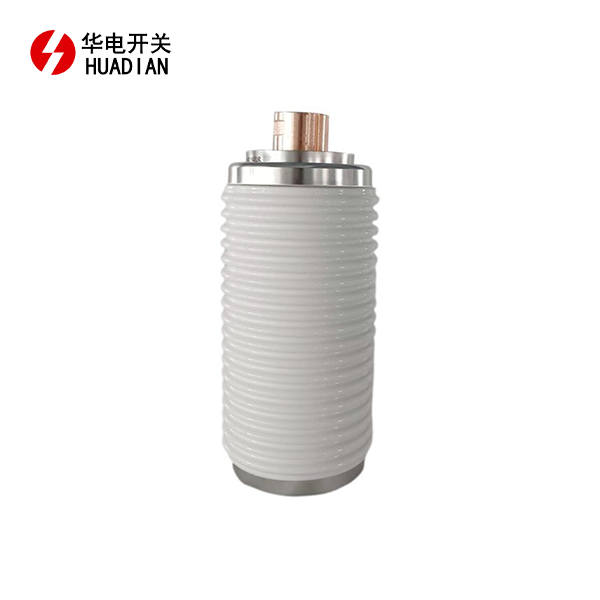
The following are specific solutions and preventative measures:
1. Fault Location and Confirmation
Before troubleshooting, it's crucial to accurately determine if a leak actually exists. Visual scratches alone are insufficient; passing a withstand voltage test does not guarantee a leak-free circuit. The most reliable method is to test the vacuum level.
On-site Testing: Use a vacuum level tester (such as the VCTT-ⅢA type) to perform a magnetic discharge test. This instrument calculates the vacuum level by measuring the ion current within the arc-extinguishing chamber. According to standards, the vacuum level of a 10-35kV vacuum circuit breaker should not be lower than 6.6 × 10⁻² Pa.
Numerical Judgment: If the measured vacuum level is lower than this standard (e.g., data in the range of 10⁻¹ Pa or higher), it indicates a leak; if the data is 10⁻⁴ Pa or lower, the performance is good.
2. Solution: Replace the Arc-Extinguishing Chamber
Once a leak is confirmed, power must be shut off immediately. The specific replacement steps (taking the ZN28-10 model as an example) are as follows:
Removing the Old Component:
Place the circuit breaker in the open position.
Remove the guide plate, crank arm, conductive clamp fastening bolts, and other connecting components in sequence.
Remove the lower support and fixing bolts, and carefully remove the leaking arc-extinguishing chamber.
Installing the New Component:
Ensure the circuit breaker is in the open position.
Place the new arc-extinguishing chamber into the upper support and tighten it.
Reinstall the lower support and connecting components. Special Note: When tightening the conductive clamp fastening bolts, ensure the lower end of the conductive clamp presses against the conductive rod step to ensure good contact.
Finally, reinstall the crank arm and guide plate.
Place the new arc-extinguishing chamber into the upper support and tighten it.
Reinstall the lower support and connecting components. Special note: When tightening the conductive clamp fastening bolts, ensure the lower end of the conductive clamp presses against the step of the conductive rod to ensure good contact.
Finally, reinstall the crank arm and guide plate.
3. Leakage Cause Analysis and Prevention
To prevent newly replaced arc-extinguishing chambers from being damaged again, it is necessary to understand and prevent common leakage causes:
Mechanical Stress and Bellows Life: The bellows is the only dynamically sealing component of the arc-extinguishing chamber, made of 0.15mm stainless steel. Each opening and closing operation causes it to deform mechanically. If improperly adjusted (e.g., poor concentricity) or operated too many times, the bellows is prone to fatigue cracking, leading to leakage.
Installation Process Requirements: During installation, the concentricity of the conductive rod and the arc-extinguishing chamber must be ensured. Improper concentricity adjustment will cause uneven stress on the metal sealing part during movement, directly damaging the bellows.
Environmental Corrosion Factors: If the equipment is installed in an environment with harmful gases, high humidity, or salt spray, the bellows is prone to pitting corrosion, which can then lead to leakage.
Mechanical Parameter Settings: It is strictly forbidden to arbitrarily increase the contact stroke (opening distance). Excessive stroke will generate excessive stress on the bellows during closing, causing permanent damage.
4. Post-Replacement Inspection
After replacing the arc-extinguishing chamber and completing installation, it is recommended to perform the following checks to ensure safety:
Mechanical Characteristics Test: Remeasure closing bounce, opening and closing speed, contact distance, and overtravel to ensure parameters meet manufacturer requirements.
Loop Resistance Test: Measure the resistance of each phase's main circuit; it should generally not exceed 80μΩ to confirm good contact of conductive parts.
Insulation and Withstand Voltage Test: Perform a power frequency withstand voltage test (e.g., 42kV, 1min) on the break to verify insulation performance.
Contact Us
In the field of high-voltage switchgear, the reliability of the vacuum interrupter directly determines the safe lifespan of the equipment. Shaanxi Huadian has optimized the connection structure between the operating mechanism and the interrupter, adopting a modular spring operating mechanism to ensure high concentricity of the conductive rod during movement, effectively protecting the bellows from lateral stress and significantly extending the mechanical life of the interrupter. Choosing Shaanxi Huadian means choosing peace of mind and long-term reliability. Please contact us:pannie@hdswitchgear.com.
YOU MAY LIKE