



What's the difference between a contactor and a relay?
2026-03-06 15:36:34
Contactors and relays are functionally similar (both are switches used to connect or disconnect circuits), but they differ significantly in their design purpose, application scenarios, and structural performance. The following is a detailed comparison:
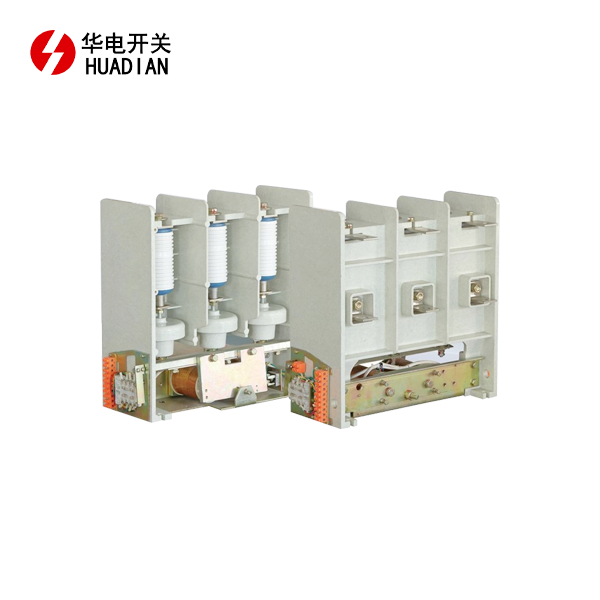
1. Different Control Circuits
Contactor: Specifically used to control main circuits or high-power loads (such as motors, electric heaters, air conditioning units, etc.). It carries a large current.
Relay: Primarily used for control circuits or low-power signals. It carries a small current and is typically used to transmit signals or expand the control range (e.g., using a small signal to control a relay, which in turn controls a contactor).
2. Different Contact Capacities and Structures
Contactor: The rated current of the contacts is usually large (from a few amperes to thousands of amperes). To extinguish the arc generated when switching large currents, contactors are usually equipped with arc-extinguishing devices (such as arc barriers or arc-extinguishing chambers).
Relay: The rated current of the contacts is usually small (generally below 5A, even in the milliampere range). Generally, there is no dedicated arc-extinguishing device, or the arc-extinguishing requirement is met by a small gap alone.
3. Different Uses and Functions
Contactors: Primarily used for frequently connecting or disconnecting the main circuit to achieve remote automatic control. Their function is relatively simple: to "open" and "close" the load.
Relays: Offer a wider range of functions. Besides intermediate relays that transmit signals, there are relays that operate based on changes in specific physical quantities (such as current, voltage, time, temperature, and pressure) (e.g., thermal relays, time relays, voltage relays, etc.). They are mainly used for logic control, signal amplification, and protection.
4. Different Number of Contacts
Contactors: In addition to main contacts (usually normally open, NO) for switching the main circuit on and off, they typically have several pairs of auxiliary contacts (normally open NO, normally closed NC) for control circuits.
Relays: The number of contacts varies depending on the model, but generally, there can be more contact pairs (e.g., multiple sets of changeover contacts), and there is usually no strict distinction between main and auxiliary contacts; all contact capacities are basically the same.
5. Focus of Operating Principle
Although both are driven by electromagnetic coils, their design goals differ:
Contactors: The design focus is on withstanding high current surges, rapid heat dissipation, and effective arc extinguishing.
Relays: The design focus is on sensitive operation, high control precision (e.g., accurate timing of time relays), small size, and long lifespan (at rated low current).
Summary
| Features | Contactor | Relay |
|---|---|---|
| Main applications | Controls high-power loads (motors, heaters, etc.) | Control of low-power signals, logic transmission, and protection. |
| Load current | Large (several amperes to several kiloamperes) | Small (a few mA ~ a few A) |
| Arc extinguishing device | Typically includes (arc extinguishing chambers, arc-damping plates) | Usually none (or very rudimentary) |
| Contact type | Main contacts (high capacity) + auxiliary contacts (low capacity) | All contacts have essentially the same capacity, with a wide variety of types. |
| Function type | Primarily for on/off function | Rich variety (intermediate, time, thermal, voltage, etc.) |
| Application location | Main circuit | Control circuit |
In simple terms: You can think of a contactor as a switch that does the heavy lifting (directly turning the motor on/off), and a relay as a switch that directs and transmits signals (using a small current to control the contactor, or to detect temperature, time, etc.). In a typical electrical control cabinet, the relay (or PLC) usually activates first, then controls the contactor to engage, ultimately making the motor start running.
Contact Us
Shaanxi Huadian Electric Co., Ltd., deeply rooted in the high-voltage electrical appliance field, profoundly understands the weight of this responsibility. Relying on a nearly 10,000-square-meter modern production workshop and fully automated assembly lines, we have increased our annual production capacity to 10,000 units, ensuring that every high-voltage contactor series product leaving the factory possesses a powerful "heart" capable of handling high-power loads.
We not only have a professional R&D team and new product testing laboratory, but also integrate the philosophy of "product originality and technological innovation" into the very DNA of our products. Our high-voltage contactors are specifically designed for complex working environments such as power plants, metallurgy, petrochemicals, railways, and mines. Whether it's a vacuum contactor requiring reliable operation in an underground coal mine or a motor control circuit with frequent starts in a power plant project, Shaanxi Huadian contactors, with their excellent arc-extinguishing performance and stable electromagnetic mechanism, can confidently meet the stringent challenges of the "main circuit," achieving precise and frequent control over long distances. For inquiries, please contact us:pannie@hdswitchgear.com.
YOU MAY LIKE