



How to identify and troubleshoot a trip failure in a high-voltage switchgear?
2026-01-06 13:31:37
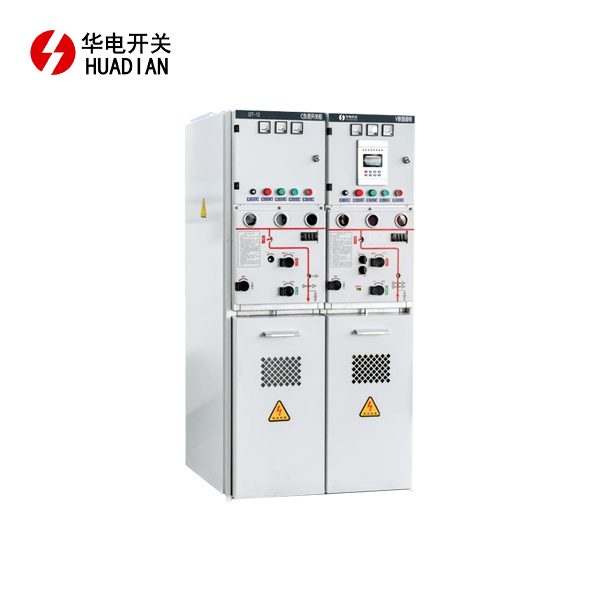
High-voltage switchgear tripping failures are common equipment problems in power systems, requiring prompt and accurate diagnosis and resolution to ensure the safe and stable operation of the power system. The following are detailed diagnostic steps and troubleshooting methods:
I. Troubleshooting Steps
Observe Signals and Indicators
Check if the trip indicator light on the control cabinet is lit. If not, it may indicate a control circuit fault.
Check the protection devices (such as microprocessor-based protection relays) for alarm messages or fault records (e.g., "control circuit open circuit," "energy storage abnormality," "tripping failure," etc.).
Confirm if the mechanical position indicator displays the tripped status. If the indication does not change, it may be due to mechanical jamming.
Check the Electrical Circuit
Control Power Supply: Measure whether the tripping circuit voltage is normal (usually DC 110V/220V). Check if the fuses and circuit breakers are intact.
Trip Coil: Measure the coil resistance to determine if it is burnt out or open-circuited (usually the resistance is tens to hundreds of ohms).
Auxiliary Contacts: Check if the normally open/normally closed auxiliary contacts of the circuit breaker have poor contact or have not switched.
Operating Buttons/Relays: Test whether the local/remote tripping buttons and tripping relays operate normally.
Mechanical Inspection
Operating Mechanism: Check for insufficient energy storage in the spring mechanism, normal pressure in the hydraulic mechanism, and adequate air pressure in the pneumatic mechanism.
Connecting Rods and Transmission Components: Check for deformation, jamming, rust, or detachment.
Arc Extinguishing Chamber and Contacts: For vacuum circuit breakers, observe for air leakage in the vacuum bulb (this can be determined through a withstand voltage test or by examining the internal color); for SF6 circuit breakers, check for excessively low gas pressure.
Fault Recording and Testing
Analyze the current and voltage waveforms during tripping using secondary equipment recordings to determine if overcurrent or a failure to send a trip signal exists.
Perform characteristic tests on the circuit breaker (such as opening and closing time, speed, and synchronicity), and compare with standard parameters.
II. Common Fault Causes and Troubleshooting Measures
| Fault Type | Possible Causes | Solutions |
|---|---|---|
| Electrical circuit fault | 1. Control power supply failure or low voltage | Restore power and adjust voltage to the rated range. |
| 2. Burned-out or open-circuited trip coil | Replace the trip coil and check if the coil's rated voltage matches. | |
| 3. Poor contact of auxiliary contacts | Clean or replace auxiliary contacts and adjust contact travel. | |
| 4. Malfunction of trip relay or button | Replace the relay or button. | |
| Mechanical fault | 1. The mechanism is not storing energy or has insufficient energy. | Restore energy; inspect the energy storage motor, springs, or hydraulic pump. |
| 2. Transmission components are stuck or corroded. | Clean, lubricate, or replace damaged parts; check the connecting rod tightness. | |
| 3. Contacts are welded or mechanically deformed. | Replace damaged contacts or arc-extinguishing chambers; adjust mechanical dimensions. | |
| Body fault | 1. Vacuum circuit breaker leakage | Replace the vacuum interrupter and perform a withstand voltage test. |
| 2. Low SF6 gas pressure (SF6 circuit breaker) | Replenish the gas to the rated pressure, check for leaks and address any sealing issues. | |
| 3. Insulation aging or breakdown | Perform an insulation resistance test and replace any damp or damaged insulation components. | |
| Protection or control fault | 1. The protection device did not issue a trip signal. | Check the protection settings, wiring, and logic settings; simulate and test the protection operation. |
| 2. The anti-pumping circuit is malfunctioning. | Check the anti-pumping relay wiring and function. |
III. Safety Handling Procedures
Power Outage and Isolation
Immediately disconnect the upstream power supply and ensure the circuit breaker is in "maintenance mode".
Connect the grounding wire, set up a safety fence, and implement the "power outage, voltage testing, grounding, and tagging" measures.
Troubleshooting
Check each item according to the above steps, prioritizing common and easily damaged components (such as coils and auxiliary contacts).
Use multimeters, relay protection testers, and other tools to assist in diagnosis.
Repair and Testing
After replacing the faulty component, manually test the flexibility of the mechanism's operation.
Perform a low-voltage operation test (generally, the trip coil should operate reliably at 30%-65% of the rated voltage).
Before restoring power, perform a no-load opening and closing test and measure parameters such as circuit resistance and insulation resistance.
Recordation and Prevention
Record the fault phenomenon, cause, and handling measures, and archive them for future reference.
Regular Maintenance: Check the mechanism lubrication and auxiliary contact condition, clean insulating components, and perform preventative tests (such as mechanical characteristic tests every 3-5 years).
IV. Emergency Responsee
If a fault causes the circuit breaker to fail to trip and the system requires emergency isolation, the backup circuit breaker should be activated or the system should be isolated via an upstream switch.
Forced repetition of the operation is strictly prohibited to avoid exacerbating the fault (such as burning out the coil or damaging the mechanism).
V. Professional Recommendations
When replacing SF6 or vacuum interrupters, or adjusting mechanical structures, it is recommended that the operation be performed by the manufacturer or professional technicians.
For faults caused by microprocessor-based protection devices, the logic circuit should be analyzed in conjunction with secondary drawings, and the protection program should be upgraded if necessary.
Promote condition-based maintenance, using online monitoring (such as mechanical characteristic sensors and partial discharge detection) to provide early warnings of potential faults.
Handling high-voltage switchgear tripping faults requires a comprehensive analysis of the electrical, mechanical, and protection systems. If professional experience is lacking, the equipment manufacturer or power maintenance unit should be contacted promptly to ensure operational safety and system reliability.
Contact Us
When a sudden tripping fault occurs, every second of hesitation is a test of power grid safety. Shaanxi Huadian understands this well; we not only provide equipment, but also 24/7 fault solutions and reliable power protection. Please contact us for a quote:pannie@hdswitchgear.com.
YOU MAY LIKE