



What are the functions and applications of the electric operating mechanism in switchgear?
2026-01-08 13:34:02
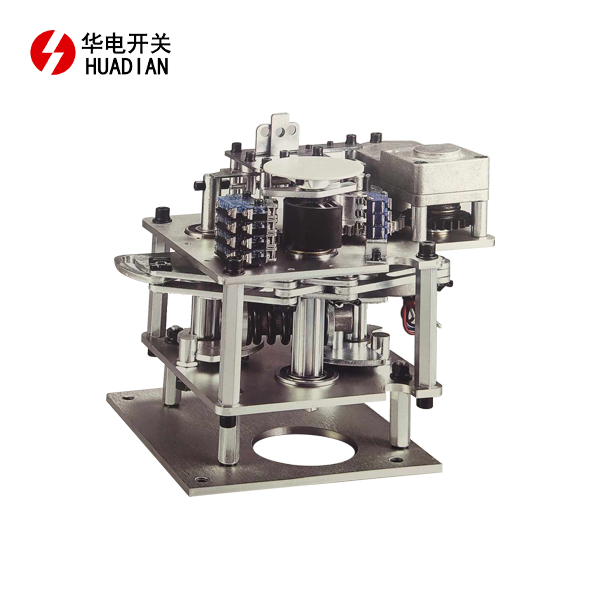
I. What is an Electrically Operated Mechanism for Switchgear?
It refers to an electromechanical integrated device installed on high-voltage switchgear (such as circuit breakers, disconnectors, grounding switches, etc.) to replace traditional manual operating handles. Powered by an electric motor, it drives the switching equipment to open and close via a mechanical transmission device.
Core Purpose: To achieve remote electrical control operation and integration with automation systems.
II. Main Functions and Advantages
Remote Operation: Operators can control the equipment from the main control room via buttons, computers, or touchscreens, eliminating the need to visit the site and ensuring personal safety (especially during faults).
Automation Integration: As a fundamental execution unit for smart grid/distribution automation, it can receive and execute instructions from PLCs, SCADA systems, relay protection devices, or smart terminals, enabling automatic fault isolation, power restoration, and load switching.
Improved Efficiency and Reliability: Operation is fast and accurate, avoiding inconsistencies in force and speed that may occur with manual operation, reducing human error.
Status Monitoring and Feedback: Typically equipped with multiple auxiliary contacts (normally open/normally closed), it can provide real-time feedback to the control system on the switch's open/closed position, the energy storage status of the operating mechanism, and the motor's operating status.
Mechanical and Electrical Interlocking: Easily integrates with other interlocking devices within the cabinet to achieve "five-proof" functions, ensuring the safety of operating procedures and equipment.
III. Main Types and Structures
Based on the different switching devices they drive, circuit breakers are mainly classified into the following categories:
1.Circuit Breaker Electric Operating Mechanism (Spring-Stored Type is the Most Common)
Structure: Typically consists of an energy storage motor, a reduction gear set, a spring energy storage and release device, a closing coil/trip unit, a opening coil/trip unit, a position indicator, and auxiliary switches.
Working Process:
Energy Storage: The motor starts, compressing the operating spring through the gears. Once the energy storage is complete, the motor automatically stops, and the limit switch cuts off the motor power.
Closing: Upon receiving a closing signal, the spring energy is released, driving the circuit breaker to close quickly.
Opening: Upon receiving a opening signal, the opening trip unit actuates, releasing the mechanism, and the circuit breaker opens quickly under the action of the opening spring.
Key Features: The closing power comes from the pre-stored spring; the motor is only used for energy storage. Therefore, the required power is low, the closing speed is fast, and it is independent of the motor's power supply status.
2.Electric Operating Mechanism for Disconnecting Switches/Grounding Switches
Structure: Typically consists of an AC or DC motor, a gearbox (worm gear is common), a torque limiting mechanism, position limit switches, and a manual operating interface.
Operating Characteristics: The motor directly drives the switch spindle for rotation or linear motion via the gearbox. The torque limiting mechanism is crucial; it automatically cuts off the motor power when the switch jams or reaches its endpoint, preventing equipment damage.
Integrated Intelligent Operating Mechanism
The latest development trend integrates a motor drive unit, a microprocessor control unit, sensors (position, temperature, torque), and a communication module.
It possesses advanced functions such as self-diagnosis, power monitoring, sequential control, and network communication (e.g., Modbus, IEC 61850).
IV. Detailed Explanation of Key Components
Power Section: Miniature motor (AC 380V/220V or DC 110V/48V, etc.).
Transmission Section: Gears, worm gears, connecting rods, etc., converting the motor's rotary motion into the required linear or rotary motion.
Control and Signal Section:
Control Circuit: Includes contactors, relays, buttons, etc., used to start and stop the motor and operate the coils.
Auxiliary Switches: Provide multiple isolated contacts for status feedback and interlocking.
Limit Switches: Detect the end point of the mechanism's travel and automatically stop the motor.
Manual-Electric Switching Device: In emergencies or maintenance, a manual operating handle can be inserted for local operation. It usually has a mechanical interlock to prevent accidental electric operation during manual switching.
Protection Devices: Motor overload protection, stall protection, temperature controller, etc.
V. Selection and Application Considerations
Matching: Must be fully compatible with the switchgear model, switchgear type (circuit breaker VS disconnector), and operating torque/stroke requirements.
Power Supply Voltage: Select the appropriate motor and control power supply voltage (DC110V, AC220V, etc.) based on the DC panel or AC system voltage of the power station.
Protection Level: Select the appropriate IP protection level based on the installation environment (indoor/outdoor).
Interlocking Function: Ensure that its auxiliary contacts meet the logic requirements of the switchgear's "five-proof" interlocking.
Communication Interface: For intelligent projects, the communication protocol (e.g., dry contact, RS485, Ethernet) and specifications must be clearly defined.
Reliability: Choose a reputable brand; the mechanical and electrical lifespan of the mechanism itself is a key indicator.
VI. Common Faults and Maintenance
Motor Does Not Start: Check the power supply, fuses, limit switches, thermal relays, and control circuit.
Insufficient Energy Storage/Failure to Open or Close: Check if the motor is normal, if the transmission components are jammed, and if the spring mechanism is faulty. Status signal error: Auxiliary switch position improperly adjusted or contacts damaged.
Maintenance points: Regularly check the lubrication of mechanical parts, clean dust, test manual/electric functions, and check fasteners and electrical connections.
Summary
Electric operating mechanisms in switchgear serve as a "bridge" for upgrading traditional power distribution equipment into automated and intelligent systems. Their proper selection, installation, and maintenance are crucial for improving power supply reliability and achieving unmanned and intelligent power distribution management. In the context of smart grids and the Industrial Internet, their integration and intelligence levels will continue to improve.
In today's era of intelligent and automated power systems, Shaanxi Huadian, leveraging its profound industry experience and technological innovation, provides you with highly reliable, intelligent, and comprehensive solutions for switchgear electric operating mechanisms, ensuring precise and error-free operation and giving you complete control over power grid management. Please contact:pannie@hdswitchgear.com.
YOU MAY LIKE