



How to solve the problem of excessively long energy storage time in vacuum circuit breakers?
2025-12-19 11:27:43
Excessive charging time in vacuum circuit breakers is a common problem that can lead to delayed or failed switching operations, affecting system reliability and safety. Solving this problem requires a systematic troubleshooting approach, typically focusing on four areas: mechanical transmission, energy storage motor, operating power supply, and control circuit.
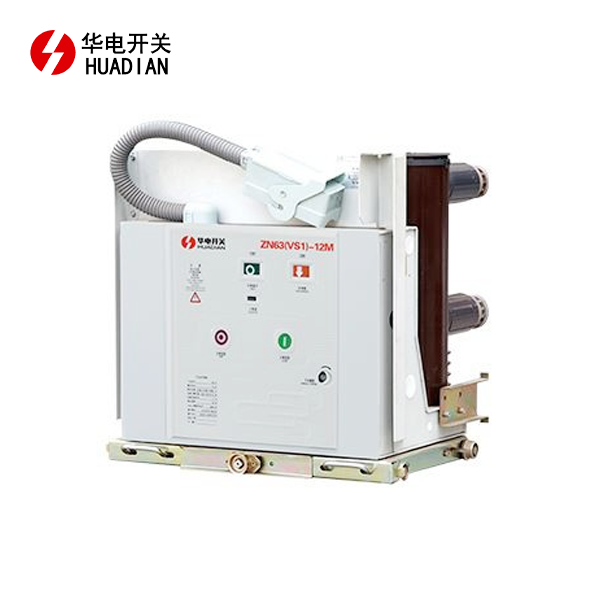
The following are detailed troubleshooting steps and solutions:
I. Main Cause Analysis and Troubleshooting Steps
1. Energy Storage Mechanism (Mechanical Part) Problems - Most Common Cause
Inspection Points:
Lubrication of transmission components: Check whether the energy storage chain, gears, connecting rods, bearings, ratchets, and other transmission parts are lacking oil, dry, rusty, or accumulated with dust and dirt, leading to increased frictional resistance.
Component wear and deformation: Check for worn parts (such as pawls, cams), deformation, or damage. Worn gears or stretched chains can lead to low transmission efficiency.
Tightening condition: Check if all screws and pins are loose, causing energy loss during transmission.
Spring condition: For spring-operated mechanisms, check if the closing spring is stuck, has abnormal pre-compression force, or if the spring itself is fatigued. Note: Spring inspection must be performed in the open and de-energized state to ensure safety.
Solution:
Thoroughly clean the transmission mechanism.
Apply special low-temperature lubricating grease (such as molybdenum disulfide) to all rotating and sliding parts. Note that greasy or oily lubricants that easily attract dust should not be used.
Replace worn or deformed parts.
Retighten all connecting parts.
2. Energy Storage Motor Problems
Inspection Points:
Motor performance degradation: The motor's output torque and speed decrease due to long-term use, moisture damage, or bearing damage.
Power supply voltage: Measure the actual terminal voltage of the motor during operation. Low voltage (below 85% of the rated voltage) will cause the motor to be weak and rotate slowly.
Carbon brush wear: For brushed DC motors, check if the carbon brushes are worn too short, have poor contact, or have insufficient spring pressure.
Motor bearings: Check if the motor bearings are lacking lubrication or are damaged, causing the rotor to rotate poorly.
Troubleshooting Methods:
Measure the motor winding resistance with a multimeter to check for inter-turn short circuits or open circuits.
Ensure the power supply voltage is within the specified range (usually ±10% of the rated voltage).
Replace worn carbon brushes and clean the commutator.
Lubricate the motor bearings or replace the motor.
3. Power Supply Issues
Checkpoints:
Insufficient power capacity: The DC power supply or battery pack is aging, its internal resistance is increasing, and the voltage drop is too large during motor startup, preventing it from providing sufficient current.
Excessive circuit voltage drop: Check the cables, connectors, and contacts (such as energy storage limit switch contacts and auxiliary switch contacts) in the circuit from the power supply to the circuit breaker and motor for excessive contact resistance, oxidation, or looseness.
Troubleshooting:
Test the load capacity of the DC power supply or battery pack and replace aging batteries.
Check and tighten all wiring terminals and clean any oxidation. Pay particular attention to the contacts of the energy storage limit switch, as these contacts are prone to burning due to frequent operation.
If the wiring is too long or the wire diameter is too small, consider replacing the cables with larger cross-sectional area cables.
4. Control Circuit and Microswitch Issues
Inspection Points:
Improper adjustment or damage to the energy storage limit switch (limit switch): This is a crucial point. If the limit switch position is misaligned, it may cut off the motor power prematurely before the spring is fully charged, causing the next energy storage cycle to start from scratch, resulting in a perceived "longer time." Alternatively, the contacts may have poor contact, leading to intermittent operation.
Auxiliary switch issues: Poor contact in the auxiliary switch contacts linked to energy storage.
Energy storage relay: The contacts of the intermediate relay or contactor controlling the energy storage motor are burned or corroded, resulting in high contact resistance.
Troubleshooting Methods:
Precisely readjust the position of the energy storage limit switch to ensure that it reliably cuts off the motor power the moment the spring is fully charged. Refer to the manufacturer's manual for adjustment.
Replace damaged limit switches, auxiliary switches, or relays.
II. Diagnostic Procedure (Quick Troubleshooting Sequence)
Listen to the sound and observe the phenomena: During the energy storage process, carefully listen for any abnormal friction or impact sounds. Observe whether the motor rotation appears strained and whether the rotational speed is uniform.
Measure the voltage: Measure the actual voltage across the motor terminals at the moment of motor startup and during operation. If the voltage drops significantly during startup, the problem lies in the power supply or wiring.
Check the mechanics: Disconnect the power supply (ensure safety!), and manually perform the energy storage operation (if there is a manual energy storage handle). Feel if the resistance is uniform and not excessive. Check for lubrication and wear.
Check the limit switches: Pay close attention to the operating position and contact condition of the energy storage limit switches.
Test the motor: If all of the above are normal, consider removing the motor separately (disconnecting it from the mechanism) and powering it on to test its no-load speed and sound to see if they are normal.
III. Preventive Maintenance Recommendations
Regular Lubrication: Clean and lubricate the mechanism according to the manufacturer's specified schedule.
Regular Inspection: This includes checking screw fasteners, contact condition, spring appearance, and chain tension.
Regular Operation: For circuit breakers that remain inactive for extended periods, perform regular opening and closing operations and energy storage operations under low voltage conditions to maintain the mechanism's functionality.
Record Data: Record the normal energy storage time as a baseline for future comparison. A significant increase in this time can serve as an early warning.
Safety Warnings
Before performing any inspection or maintenance, ensure that:
The circuit breaker is completely disconnected (in the working or test position).
All operating and control power supplies (including the energy storage motor power supply) are disconnected.
The main circuit is reliably grounded and discharged.
For spring mechanisms, ensure that the spring has completely released its energy (is in the uncharged state) to prevent accidental release and potential personal injury.
Summary
The key to solving the problem of excessively long charging time in vacuum circuit breakers is to proceed "from simple to complex, from outside to inside." Start with simple tasks such as checking the power supply voltage and lubrication, and gradually move on to adjusting the limit switches and repairing the motor. Lubrication of mechanical transmission components and adjustment of the limit switches are crucial for resolving most of these problems. If the problem is complex, it is recommended to contact professional technicians or the equipment manufacturer for assistance.
Shaanxi Huadian understands that the core of power supply reliability lies in ultimate dependability and speed. We have honed the ultra-fast and stable energy storage performance into a signature advantage of our vacuum circuit breakers, completely eliminating your concerns. Features include a highly efficient and low-consumption drive system, a customized high-torque energy storage motor, low power consumption design with wide voltage adaptability, and a modular design that makes key components easy to inspect and replace. Clear energy storage indicators and a mechanical manual release interface provide dual safety protection and operational convenience for maintenance personnel. Please contact us for detailed technical information and customized solutions.
Email:pannie@hdswitchgear.com
Whatsapp/Wechat:+8618789455087
YOU MAY LIKE