



How can vacuum circuit breaker manufacturers reduce failure rates?
2025-12-13 14:26:31
Vacuum circuit breakers are indispensable protective devices in modern power systems, and their reliability directly affects the safe and stable operation of the power grid. With the increasing demands on equipment performance in power systems, vacuum circuit breaker manufacturers face the significant challenge of reducing product failure rates. This article will systematically elaborate on effective strategies for vacuum circuit breaker manufacturers to reduce failure rates from five aspects: design optimization, material selection, manufacturing processes, quality control, and after-sales service.
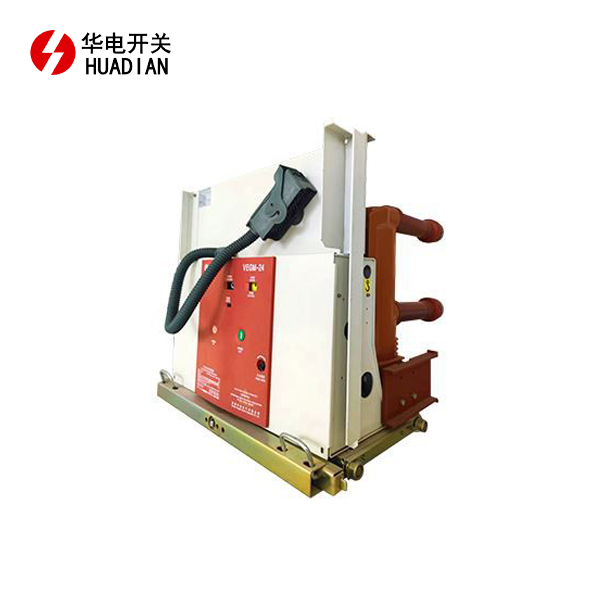
I. Design Optimization: Reducing Potential Faults at the Source
1. Optimized Electric Field Distribution Design
The electric field distribution of a vacuum circuit breaker directly affects its insulation performance and breaking capacity. Optimizing the contact structure and shielding shape through computer-aided design software electric field simulation analysis can reduce local electric field intensity and prevent partial discharge. Simulating the internal structure of the circuit breaker using three-dimensional electric field calculation software to ensure uniform electric field distribution is an effective means of reducing insulation faults.
2. Reliability Design of Mechanical Structure
Mechanical faults are one of the common problems of vacuum circuit breakers. Adopting a modular design concept reduces the number of moving parts and lowers mechanical complexity. Dynamic simulation analysis of the operating mechanism optimizes spring parameters and linkage mechanisms to ensure the accuracy and consistency of opening and closing actions. Simultaneously, introducing anti-misoperation designs, such as mechanical interlocking devices, can effectively prevent faults caused by human error.
3. Optimized Thermal Design
Vacuum circuit breakers generate heat during long-term operation. Poor thermal design can lead to excessive temperature rise and accelerated material aging. Through thermal simulation analysis, the conductive circuits are rationally arranged, the heat dissipation structure is optimized, and an appropriate conductor cross-sectional area is selected to ensure that the temperature rise of the equipment under rated current does not exceed the standard requirements. For high-current products, a combination of forced air cooling or natural convection cooling can be considered.
II. Material Selection: Laying the Foundation for Reliability
1. Key Materials for Vacuum Interruptors
The vacuum interruptor is the core component of a vacuum circuit breaker, making its material selection crucial. Contact materials should possess high electrical conductivity, high thermal conductivity, good weldability, and low current-cutting value. Currently, copper-chromium alloy contacts are widely used, but their chromium content must be controlled within a reasonable range to ensure performance. The ceramic shell should be made of high-purity alumina ceramic, offering good airtightness and mechanical strength.
2. Insulation Material Selection
Aging of insulation materials is a significant cause of circuit breaker failures. Insulation materials with high temperature resistance, arc resistance, and aging resistance should be selected. For organic insulation materials, rigorous weather resistance and tracking resistance tests are required; for inorganic insulation materials, attention must be paid to the matching of their mechanical properties and coefficients of thermal expansion.
3. Sealing Materials and Processes
The sealing performance of a vacuum circuit breaker directly affects its service life. The material selection for the metal bellows should consider its fatigue life and corrosion resistance; stainless steel is typically used. For static sealing parts, sealing ring materials that are resistant to high and low temperatures and aging should be selected, and the machining accuracy of the sealing surface should be strictly controlled.
III. Manufacturing Process Control: Ensuring Product Consistency
1. Vacuum Interruptor Manufacturing Process
The manufacturing process of the vacuum interruptor directly affects its vacuum level and reliability. Strict control of exhaust process parameters is essential, including baking temperature, time, and vacuum requirements. Helium mass spectrometry leak detection technology is employed to ensure the leakage rate of the interruptor is below 10^-12 Pa·m³/s. High-precision electron beam welding should be used for contact welding to ensure weld strength and sealing.
2. Assembly Process Control
The assembly process is a critical link affecting the performance of the vacuum circuit breaker. A clean assembly environment must be established, and ambient temperature and humidity must be controlled to prevent dust and impurities from entering the product. Torque control tools should be used to ensure consistent tightening force of bolt connections. For critical dimensions, tooling fixtures should be used to ensure assembly accuracy and avoid human error.
3. Aging and Testing Process
Rigorous testing before shipment is an effective means of detecting potential faults. A comprehensive testing process should be established, including mechanical characteristic testing, loop resistance testing, power frequency withstand voltage testing, and partial discharge testing. For high-voltage products, lightning impulse tests and breaking capacity verification should also be conducted. Aging tests simulating actual operating conditions can expose potential defects in advance.
IV. Quality Management System: Full-Process Control
1. Supply Chain Quality Management
Establish a rigorous supplier evaluation system, conducting qualification audits and on-site assessments of key raw material and component suppliers. Implement an incoming material inspection system, performing physicochemical property testing and microstructure analysis on key materials. Establish a raw material batch traceability system to ensure the traceability of each batch of materials.
2. Production Process Quality Control
Promote Total Quality Management (TQM) concepts, establishing full-process quality control points from raw material entry to finished product exit. Employ Statistical Process Control (SPC) methods for real-time monitoring and trend analysis of key process parameters. Implement first-piece inspection, patrol inspection, and last-piece inspection systems to ensure stable and controlled production processes.
3. Reliability Verification and Improvement
Establish a product reliability database, collect on-site operating data and failure information, and conduct Failure Mode and Effects Analysis (FMEA). Verify the effectiveness of design improvements through accelerated life testing and reliability growth testing. Hold regular quality analysis meetings to develop corrective and preventative measures for typical failures, forming a closed-loop management system.
V. After-Sales Service and Technical Support
1. Installation Guidance and Commissioning
Provide professional installation manuals and training to ensure users correctly install and use the product. For critical projects, dispatch technical personnel to provide on-site installation and commissioning guidance to avoid early failures due to improper installation. Establish an installation quality checklist to record and confirm key installation parameters.
2. Operation and Maintenance Support
Develop an intelligent monitoring system to monitor the mechanical characteristics, electrical parameters, and temperature changes of the circuit breaker in real time, providing early warnings of potential faults. Provide regular maintenance and inspection guidelines to guide users in preventative maintenance. Establish a remote technical support platform to quickly respond to users' technical inquiries and troubleshooting needs.
3. Fault Analysis and Feedback Improvement
Establish a comprehensive fault reporting and analysis process to conduct root cause analysis for each fault. Feedback the fault analysis results to the design and production stages to drive continuous product improvement. Regularly publish product technical bulletins, sharing typical fault cases and improvement measures to enhance the technical level of the entire industry.
Conclusion
Reducing the failure rate of vacuum circuit breakers is a systematic project requiring coordinated efforts across multiple dimensions, including design, materials, processes, quality, and service. By employing appropriate design methodologies, implementing rigorous quality control measures, and establishing a comprehensive service system, vacuum circuit breaker manufacturers can improve product reliability and provide users with safer and more stable power protection equipment. With the continuous development of new materials, new processes, and intelligent technologies, the failure rate of vacuum circuit breakers is expected to further decrease, providing more reliable equipment support for smart grid construction.
Shaanxi Huadian adheres to the philosophy of "Safety Every Degree, Reliability Every Moment," and continuously invests in research and development. We not only provide products, but also reliable power safety solutions. Please contact us:pannie@hdswitchgear.com.
YOU MAY LIKE